With 57 Disciplinary Cases Pending, Korea’s Parties Disputed Seats on the Ethics Committee
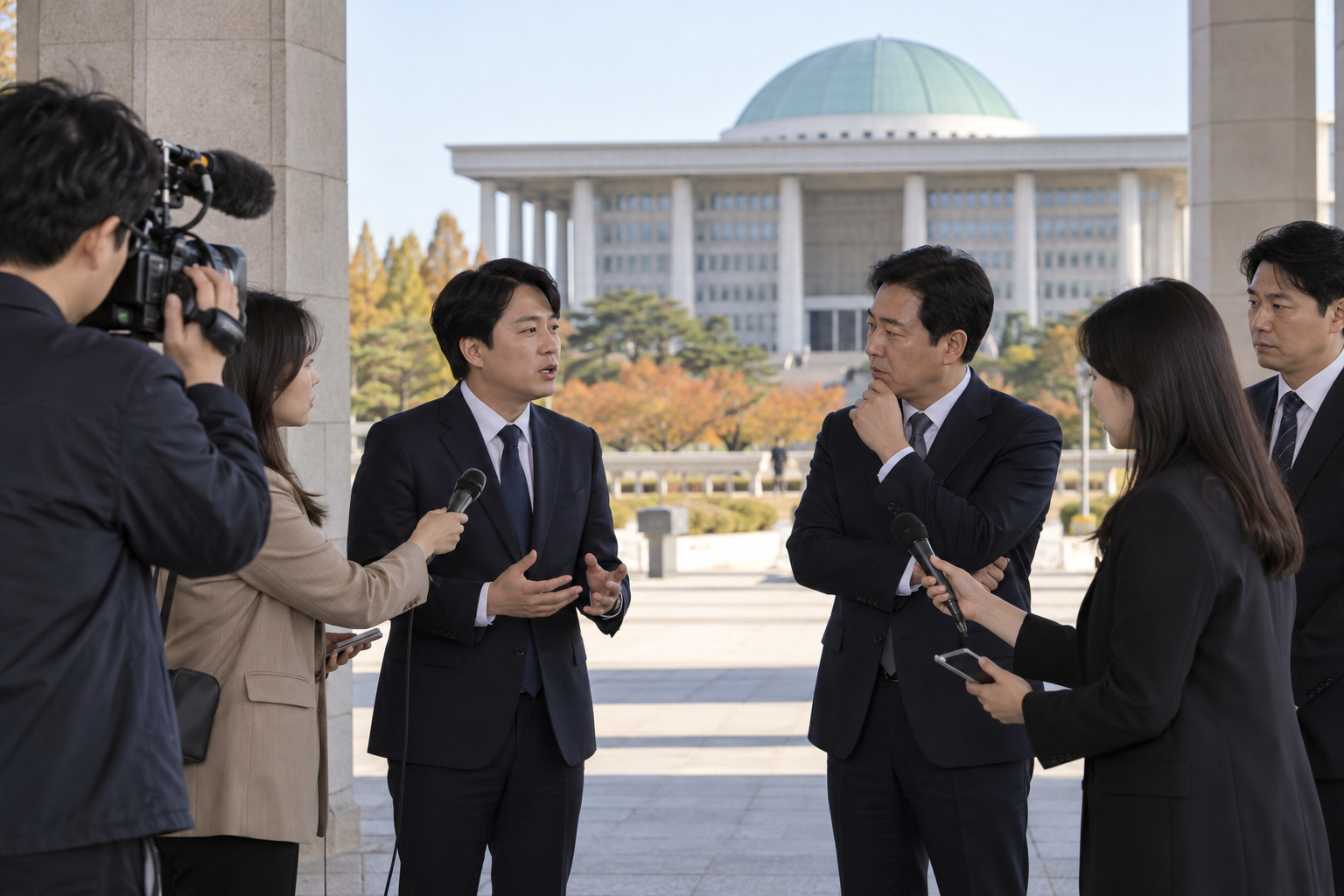
The Democratic Party warned People Power Party lawmaker Joo Jin-woo that it would hold him legally accountable; Joo responded with plans to file a counter-complaint. On October 26, YTN reported that all 57 disciplinary cases in the 22nd National Assembly remained unresolved because its Special Committee on Ethics had not been formed. A resolution to establish the committee, submitted on October 1 by Democratic Party floor leader Han Byung-do, is listed as received by the relevant committee in the legislative records maintained by People's Solidarity for Participatory Democracy. Alongside the threats of criminal complaints, readers should examine how the Assembly is setting up its own body to review lawmakers' conduct. The Fact, October 28, YTN, October 26, PSPD legislative tracker, bill 2221742
In its October 10 report, Edaily identified the allocation of committee seats as the dispute delaying its formation. According to that report, the Democratic Party and the People Power Party agreed in July last year to a 12-member ethics committee with six members from each party, and the proposal passed the House Steering Committee. The Democratic Party leadership subsequently sought a ruling-party majority and held back the plenary vote. Han's new proposal this month would replace six seats for each of the two negotiating blocs with six for the ruling side and six for the opposition as a whole. Giving seats to other opposition parties, including the Rebuilding Korea Party, would reduce the People Power Party's share, prompting its objection. Edaily, October 10, 05:00
A People Power Party official told Edaily that giving some of its seats to other parties could leave the committee handling only disciplinary cases aimed at the party. The Democratic Party demanded that it come to the negotiating table. Before deciding which lawmakers to scrutinize, the parties were disputing who would sit in judgment and cast the votes. The records maintained by People's Solidarity for Participatory Democracy contain no information on a plenary vote on Han's resolution. Edaily report, YTN, October 26, 11:22, PSPD legislative records
The National Assembly is responsible for completing the process. Article 46 of the National Assembly Act provides for an ethics committee to examine lawmakers' qualifications and discipline. Under Article 48, once the Assembly approves the resolution establishing it, the speaker appoints members following requests from the negotiating blocs. Lawmakers submitting an ordinary disciplinary request need the support of at least 20 members and, in principle, must file it within 10 days of learning of the grounds. But if the ethics committee does not exist, the speaker's three-day deadline for referring the case is deferred until after the committee is formed. A request can arrive on time while even the referral deadline waits for the Assembly to establish the body that will hear it. National Assembly Act, Article 46, Article 48, Articles 156–157
The Assembly already has sanctions available: a public warning, a public apology, suspension from attendance and expulsion. Narrow exceptions allow a plenary decision without the ethics committee, such as refusing an order to end an occupation of the speaker's or a committee chair's seat. Ordinary disciplinary cases over lawmakers' remarks, however, must go through the ethics committee. Filing a complaint with investigators does not set that internal process in motion in its place. National Assembly Act, Article 155, Article 156(7), Article 163
EEJE Editorial Analysis: The parties have threatened complaints against each other's lawmakers while leaving the Assembly's own disciplinary process tied up in negotiations over the committee's formation. Without an ethics committee, they cannot even hear the cases to decide which disciplinary requests are justified. Whatever legal action Han has threatened against an opposition lawmaker, moving his own resolution forward depends on decisions by the parties and the speaker. If the parties want to require a public apology or suspend a member from attendance, they must first finish establishing the body that will make that judgment. National Assembly Act: comparison of Articles 46, 48, 155 and 157, Status of the committee-formation resolution